
Who is Imam Hussein (as)?
A comprehensive publication on the life and significance of Imam Hussein (as) in Shia Islam
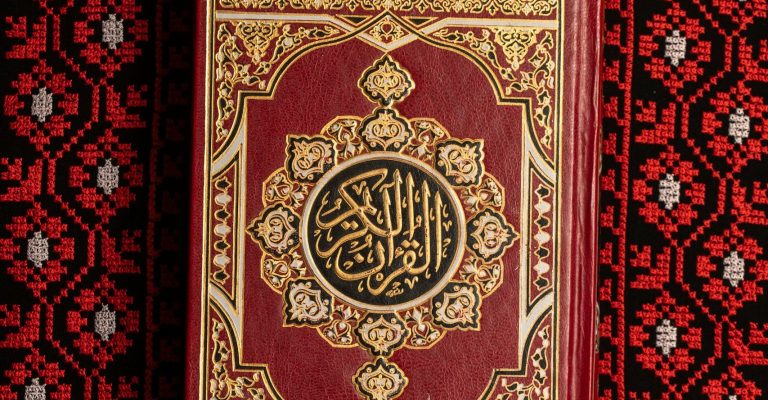

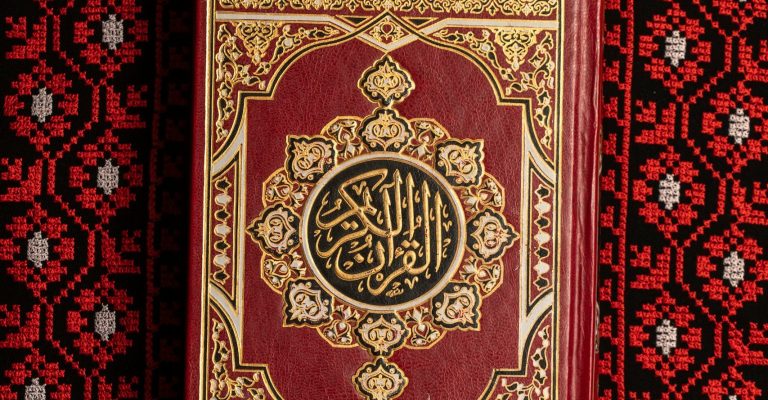
Al-Husayn (as)
حسين ابن علي
Born in 626 AD Imam Husayn ibn Ali (as) is the third Imam in Shia Islam and is a direct descendent of the Prophet Muhammad (saw). He is the second son of the Prophet's (saw) daughter Fatima (as) and thus within Ahl al-Bayt (ra). He was martyred at the battle of Karbala in 680 AD and this event is celebrated by Shia muslims on the day of Ashura. Arbeen is another celebration connected to Al-Husayn (as) and is the largest peaceful gathering where a pilgrimage is made from Najaf (the resting place of Al-Husayn's father, the first Shia Imam, Imam Ali (as)) to to Karbala. His legacy is one that has garnered eternal commemoration as he is known for his piety, justness, and sacrifice for social justice within Islam. This was in the face of tyrannical rule and to combat those weilding power within Islam for self-interested gain and evil such as leaders of the Ummayad dynasty which shall be discussed further in this essay. Such regimes which are seen to have corrupted the true nature of Islam supports the Shia argument of the Immate as the infallibilty displayed by members of the Ahulalbayt ra, who had rejected their pagan roots, could be seen to greater preserve the message of Allah and form the society that spreads Islam and its religious purity.
IMAM HUSSEIN'S BIRTH
A legend exists concerning Imam Hussein's (as) birth which tells the story of angel Futrus later named "Aateekul Hussein" (as) which translates to one freed by Imam Al-Hussein. He was freed from banishment and reassumed his place in heaven after being banished to an island for postponing an order of Allah. One of Futrus's wings were clipped and He spent his time on said island worshipping Allah. Following Imam Hussein's (as) birth, angel Gabriel was descending from heaven on Allah's command to congratulate the Rassulallah (saw) on the birth of his grandson Al-Husayn (as). He passed over angel Futrus on the island and Futrus asked where Gabriel (as) was going. Upon reciting Allah's order Futrus asked verily if he could accompany him and ask the Prophet (saw) to pray for him. Angel Gabriel (as) thus took Futruss on his wing and upon reaching the Holy Prophet (saw) asked him to supplicate to Allah for him to heal his wing. The Prophet graciously requested that angel Futrus touch the body of newly born Imam Hussein (as) and then return to his place in heaven, a request fulfilled.
Al-Husayn grew up in the tribe of Quraysh and witnessed the development and institutionalisation of Islam within Arabian society. Being born into the prophetic family the rite of aqida was performed following his birth and in addition to the descention of angel Jibreel (as) accompanied by Futruss. He is said to resemble the Prophet (saw) physically but to a lesser extent than his brother Hasan (as). "Imam Hussain (A.S.) was introduced to Ummah, while still in the bloom of his childhood as a martyr. His status was identified by the Apostle of Allah lest the Ummah do him harm. Thus was Hussain in the heart of the Apostle of Allah and described in his divine message. He was brought up in the noblest and most dignified house in Islam.: Namely the house of the Apostle of Allah (S.A.W.). Hussein (A.S.) partook of his virtues and principles, hence he was the symbol of piety and the example of faithfulness, asceictism and worship"
IMAM HUSSEIN'S UPRINGING
Having grown up within the Ahulalbayt (ra) Imam Hussain was able to grow up into a model muslim shaped by the knowledge, love, and divine guidance bestowed upon the infallible Imams (ra). Being raised amongst his grandfather Rassulallah (saw), his father Imam Ali (as) and mother Fatima (as) gave him the optimal familial unit to learn matters of religious purity, islamic justice, taqwah, and, ihsan all of which were demostrated in his later life. The Holy Prophet (saw) named Hussain (as) the "Sayyid of the youth of Paradise" indicating his pious character and status in paradise.
IMAM HUSSAIN'S REVOLUTION AND MARTYDOM
Imam Hussein (as) was alive during a most interesting time for the Islamic faith; the split between the Shia of Ali and, the yet to be defined as such, Sunni muslims. Al-Husayn's (as) adulthood is immersed in a time surrounding the question of: Who is to be successor to the Holy Prophet (saw) in leading the Umma?
Key events took place including the Saqifa Bani Sauda, the rapid expansion of the Rashidun Caliphates, the ascension of the Ummayad caliphate, and the all important Battle of Karbala where Imam Hussain (as) was martyred and achieved the highest accolade one can within Islam. Al-Husayn's revolution is deemed honourable as it was not only fighting in the name of Allah, but too fighting against injustice in the face of tyranny and to save the soul of the Islamic state.
From my research, opinions are held that Al-Husayn's revolution "cause[d] bloodshed among the Muslims to gain political power [for his household]". I however maintain that the battles that ensued were in defence of the faith, not to install the Ahulahlybayt (ra) as rulers. As a supporter of the Immate one finds it verily important to highlight how unbeffiting "political gain" is as percieved causation for Imam Husayn's martydom. His religious revolution was during the reign of the Ummayd dynasty which was at the time headed up by Yazid I, a known tyrant and enforcer of the Ummayad system. "The Umayyad rulers concentrated all their efforts to oppress and weaken the people and misappropriated public wealth to fulfil their lustful desires and finance their vices. They used to control their fates and forced them to a life of penury and spent public wealth in evil vices. This was the reason that the Holy Imam arose against them to save the nation and manifest their greatness and honor".
Imam Husayn foresaw the continued decay of the Islamic state following the death of his Father Ali (as) who was Imam (Ahlahulbayt) and fourth Caliph. Mu'awiya presided over the fifth caliphate and after his death Yazid, his son, took power and sought pledges of allegiance from the people and influencials like Al-Husayn. Failing to pledge allegiance to Yazid would have led to the death of Imam Hussein (as) and indeed ultimately did. "At that time, pledging allegiance meant that Imam Hussain (PBUH) would pledge allegiance so that Yazid would allow him (pbuh) to live, in other words, Imam (pbuh) would buy his (pbuh)’s life through this allegiance. However, Imam Hussain (PBUH) believed that no one other than God has the right to grant him (pbuh) the right to life, hence he (pbuh) said that pledging allegiance to Yazid is incompatible with [divine law]".
The Islamic state should be formulated to uphold divine law and mirror the leadership of the Prophet Muhammad (saw). The Islamic state under Yazid veered ever further into a kinship which failed to maintain the sovereignity of the Supreme Being. Sovereignty was instead weilded by Yazid as ruler within the caliphate in a manner resemblemant of a monarchy; in which the monarch/head of state holds sovereign power in a hereditary system. The problem herein is that without maintaining the Supreme Being as Sovereign, and in the absence of mechanisms of state that implement divine/divinely guided law the Islamic state reduces itself from an organism of spiritual devolution to one of divinely disenfranchised self-interested rule. "The soul of the Islamic State rests in piety and fear of God, and it’s witnessing is born by the head of the state. The state’s employees, judges and military officers are imbued with this spirit, and in turn they infuse it into the society. But once they tread the path of monarchy, the Muslim states and their rulers adopted the pomp and pageantry of Caesar. Oppression and injustice overruled justice. Instead of righteousness, profligacy and luxury had come into vogue. The failure to distinguish between the lawfulness and unlawfulness of affairs, rendered in a lack of character and actions of the rulers. Politics was no longer cogent with morality. The rulers kept their subjects under fear instead of instilling the fear of God; and instead of awakening their faith and conscious they bought them by virtue of briberies".
Al-Husayn (as) rose up in fulfilment of his duty to Islam to reinstall the spirit and purpose of the Islamic state. Although not aspiring necessarily to transform the Caliphates into Imamate rule, as the Shia of Ali were already guided by the Infallible Imams of Ahlahulbayt (ra), He (as) too affirmed the Shia belief of divine succession. His fulfilment of the ultimate sacrifice upheld his position as heir of the Prophet(s)(ra) and bearer of the divine viceregent tasked with the guidance of humanity, a mission that was entrusted to the Prophet(s)(ra) and his father Ali (as) before him. In a sermon he (as) is quoted saying: "We are the successful group of God and the nearest progeny of the Messenger of Allah (S) and his purified Ahlul Bayt and one of the two weighty things that the Messenger of Allah (S) has made us second to next to the Book of Allah which contains all the details and falsehood cannot come to it from the front and from the back and we are depended upon for its commentary and its interpretation does not make us tired. Rather we follow its truths. Thus obey us, as our obedience is obligatory because the obedience of Allah is joined with the obedience of the Prophet".
Fulfilment of Imam Hussain's (as) duty reached its defining moment at the Battle of Karbala where he (as) was martryed. His martydom is one still grieved for up until this day, and although this isn't surprising given the household to which he belongs and status within the Shiite community, it is still momentous as Arbeen day rests as the largest peaceful gathering in the world. It is a commemoration of Imam Husayn (as) celebrated by believers and non-believers alike!
The discussion of the Imam's (as) martydom brings one to better answer the question: Who is Imam Hussain (as)? Put simply, Imam Hussein (as) is the third infallible Imam known for giving his life as the ultimate sacrifice in the name of Allah to revive the soul and spirit of Islam. His martyrdom is what makes the differential spiritual connection with the Umma, and keeps his remembrance alive today for believers to follow aptly in his footsteps in striving in the path of Allah (azz). "The life of Imam Husayn (‘a) merged with the souls of the people and became united with their feelings and emotions, because he was such a fresh one that fragrance of honor and greatness issued from him. He was the one to take the society to the field of contest so that their aims may be realized and that their fate may be appointed". Each infallible Imam, like the prophets and messengers (ra), provides the Umma with an exemplary example of Islamic practice and guardianship, the same cannot be said for every leader of the faith, and indeed us as believers who all fall short to the piety of the infallibles.
There are several Quranic verses that speak on fighting in the cause of Allah (azz) and martydom which can be referred to in the case of Al-Sayyid of the youth of paradise (as).
"Do not suppose those who were slain in the way of Allah to be dead; no, they are living, and provided for near their Lord" "وَلَا تَحْسَبَنَّ ٱلَّذِينَ قُتِلُوا۟ فِى سَبِيلِ ٱللَّهِ أَمْوَٰتًۢا ۚ بَلْ أَحْيَآءٌ عِندَ رَبِّهِمْ يُرْزَقُونَ" (Quran 2:154).
- This ayat affirm the immortalitity that is granted to martyrs.
"And whoever obeys Allah and the Messenger - those will be with the ones upon whom Allah has bestowed favor of the prophets, the steadfast affirmers of truth, the martyrs and the righteous. And excellent are those as companions" "وَمَنْ يُطِعِ اللَّهَ وَالرَّسُولَ فَأُولَٰئِكَ مَعَ الَّذِينَ أَنْعَمَ اللَّهُ عَلَيْهِمْ مِنَ النَّبِيِّينَ وَالصِّدِّيقِينَ وَالشُّهَدَاءِ وَالصَّالِحِينَ ۚ وَحَسُنَ أُولَٰئِكَ رَفِيقًا" (Quran 4:69).
- This ayat reminds us to obey Allah and his Messanger (saw) to be in the company of those with the bestowed favour of Allah's grace in Paradise.