
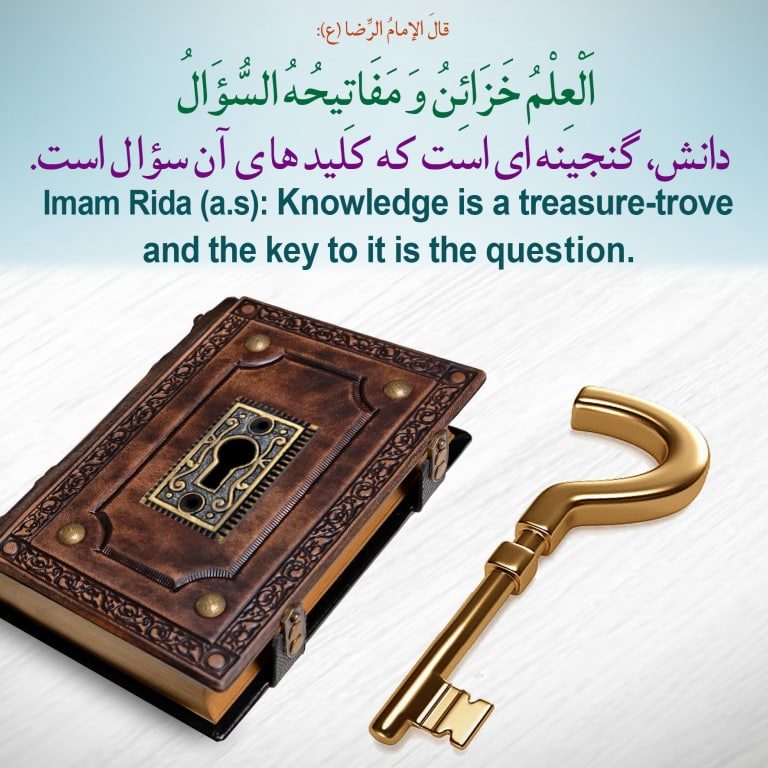
Names
of Allah
Asma al'Husna
Why study the names of Allah?
One of the core pillars of faith in Islam is the belief in One true God, the sole-creator Allah whom is referred to by his names and/or attributes, and serves as the beginnings of my Islamic study. Muslims are to be inherent seekers of knowledge (often translated to "ilm" in Arabic) in order to correctly practice Islam and live a life in accordance to Allah's teachings. Knowledge in Islam is often divided into Fard'Ayn and Fard Kifayah.
Fard Ayn- this refers to knowledge which is an obligation of every muslim to know in order to practice Islam correctly. This includes the basic pillars of faith i.e belief in Tawhid, fulfilment and conditions for making hajj, correct method of reading salah, fard financial acts such as zakat, and fasting (sawm) etc. The absence of this knowledge including what is explicitly halal and haram makes it impossible to live in accordance with the teaching's of Allah and is therefore a necessity for every individual muslim.
Fard Kifayah -this refers to knowledge which is a communal obligation that if held by a significant portion of the umma allows the individual muslim to be free of the need of this knowledge to fulfil Islamic adherence to the faith. Through communal possession of the knowledge the remainder of the umma are absolved of the collective sin of ignorance of the knowledge. This is an important facet of Islam as it permits muslims to dedicate time non-Islamic knowledge necessary for societal preservation such as medicine and other specialised fields.
Understandably Islamic knowledge acquisition strengthens the iman and develops one's taqwa and tawakkul *. An important initial way to gain an understanding of the faith and indeed our creator is to understand the many names (Asma' al-Husna) we come to learn for him from the Quran. The names and attributes of Allah swt allow us as Muslims to learn the ways of the creator, how to worship him, appreciate his creation; in short to comprehend the ways of the creator and his creation.

ASMA' AL-HUSNA
الأسماء الحسنى
Al-Hakeem
Al-Hakeem is one of the 99 names of our Lord Allah swt and the one that first garnered my attention to review further as an appreciator of knowledge, law, and, judicial processes. Al-Hakeem translates as the All-Wise, the Judicious referring to Allah's proclaimed attribute of ultimate wisdom. From this name one can derive Allah's legislation of rules to mankind to guide us from wrongdoing to living a life fulfilled with piety and pleasing to the creator. These include rules such as the later implemented prohibition of intoxication by alcohol received from the Prophet Muhammad saw for the benefit of mankind, and the instruction of Islamic prayer. In its reduction to 5 times a day (often practiced 3 times a day in Shia Islam) we see legislation of worship for the benefit of those who practice.
To Al-Hakeem belongs supreme wisdom and therein believers should find comfort in the religious rulings of Allah which are indeed for our own benefit. Through his creation his wisdom shines in the perfection of perceivable wanders such as the rotation of earth around the sun. This is perceived by earths inhabitants through the existence of night and day; "It is not allowable for the sun to reach the moon, nor does the night overtake the day, but each, in an [falak] orbit is [yasbahoon] swimming" (Quran 36:40). The confidence in the wisdom and judgement of Al-Hakeem allows us a foundation of faith upon which one can excersise their bestowed free will to abide abide by the sharia and trust in the widom of Al-Hakeem in the face of adversity and hard times.